Sunday, May 9, 2010

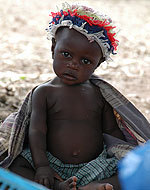
Today, Over 24,000 children died around the world

Over 24,000 children die every day around the world.

That is equivalent to:

  • 1 child dying every 3.6 seconds
  • 16-17 children dying every minute
  • A 2010 Haiti earthquake occurring almost every 9-10 days
  • A 2004 Asian Tsunami occurring almost every 10 days
  • An Iraq-scale death toll every 16–40 days
  • Just under 9 million children dying every year
  • Some 79 million children dying between 2000 and 2007

The silent killers are poverty, easily preventable diseases and illnesses, and other related causes. In spite of the scale of this daily/ongoing catastrophe, it rarely manages to achieve, much less sustain, prime-time, headline coverage.

Saturday, May 8, 2010

What has happened to Greece

Greece The Country that discovered Western Civilization is in a Chaos that will put them in debt for more than 100 years

There bankrupt - because of there governments "mismanagement of running that country" - borrowing and spending more than they should have done and the government now cannot "repay" the loans it borrowed in the past - and its peoples are revolting against the Greek government for allowing it all to happen as now the peoples will have to accept huge restrictions in their daily lives - less spending money-no pay rises-more taxes to pay etc..

Government corruption has played a big part in there downfall - and they were a "defunct country" before they were allowed to join the EU who never ever saw all this trouble coming - and there are other countries in the EU who are going to be in the same mess very soon now - Portugal-Spain - so the UK taxpayer will be having to "help bail out all these failed" EU countries - no matter we are in trouble ourselves.

And still these UK "defenders" of this now "defunct/failed EU system" say its a "good/great idea" the UK being a member country.

There are so many ex "despot 3rd world European countries" that have been allowed to join the EU system - all wanting there share of the "free-bee money handouts" - there reason for wanting to join - it was a disaster just waiting to happen

Wednesday, April 28, 2010

The African Union is considering sending 6 000 to 7 000 troops to eastern Congo to forcefully disarm Rwandan rebels linked to the country's 1994 genocide - but the organisation still has to work out key details for the operation, an official said on Wednesday.

Experts will hold meetings later this month to flesh out details of the mission and whether the force will operate on its own, with United Nations troops are already in Congo or with Congolese forces, said Peace and Security Commissioner Said Djinnit.

The presence of Rwandan rebels in eastern Congo has fuelled years of warfare in the vast Central African nation.


The rebels, who include members of the former army and extremist Interahamwe militia from Rwanda's Hutu majority, fled to Congo after leading the genocide of at least 500 000 minority Tutsis and politically moderate Hutus. They then attempted to invade Rwanda in a bid to regain power.

Rwanda has invaded Congo twice in the last decade. A total of 13 775 UN peacekeepers are also deployed in Congo, mainly in provinces bordering Rwanda, to improve security.

"These groups live in mountainous areas and forests and it is very difficult to access. Issues we will need to look at include air support" for the African force, Djinnit said.

He was speaking to reporters at the end of a two-day meeting attended by representatives of the UN mission in Congo, the UN refugee agency, the European Union and officials from Rwanda, Congo and Burundi.

The crisis is the worst humanitarian situation in the world, overtaking Sudan's troubled Darfur region, the UN's humanitarian chief said on Wednesday.

Killings continue unabated in the east of the African country, despite the official end of hostilities over two years ago, said Jan Egeland, head of UN Office for the Co-ordination of Humanitarian Affairs.

"Measured in human lives lost, I think that Congo is the number one problem in the world today," Egeland told reporters, adding that the number of casualties amounts to "a tsunami every month, year in and year out, for the last six years".

About three million Congolese are now in acute need of assistance, Egeland said.

Congo's five-year, six-nation war killed nearly four million people, according to aid groups. The war ended in 2002 with the formation of a transitional government that has struggled to extend its authority to the long-ungoverned east, where violence continue.

Both Congo's President Joseph Kabila and Rwanda's President Paul Kagame have agreed to allow the African Union to coordinate any new operation involving African Union troops to help restore order in the region

Saturday, March 27, 2010

What is a Machiavellian leader?

A successful Machiavellian leader consists of five crucial characteristics and traits. These traits are the deciding factor in whether or not the leader will be successful. These necessary characteristics include being feared or loved but not hated, having the people’s support, convincingly displaying virtues, using one’s own arms, and intelligence. Without these five qualities a leader has no hope at becoming a successful Machiavellian leader.

In medieval times it was much safer for a person to be feared than loved because people who fear you are much less likely to revolt as Machiavelli describes on page 65. However, in today’s society the type of government changes whether a leader would rather be feared than loved. The president of the United States needs to be loved rather than feared because in a democracy the people decide how long you can be leader, but in communist China or Russia being feared is more helpful because your citizens are less likely to rebel and revolt against you. If you are going to choose to be feared than it is crucial that the citizens of your country do not hate you for as Machiavelli states on page 72 hatred leads to people scheming and ultimately executing an assassination.

The second important quality for a leader is the support of the people because without the people supporting your decisions no actions can be made. The importance of people’s support is explained in almost every chapter of The Prince because without the people’s will behind you military action is not possible without auxiliary or mercenary units, holding your position as leader is not possible, and territory expansion is also not possible without help from the people. If the people do not believe in the cause you are fighting for they will not join you in battle. If you are not satisfying your people’s basic needs they will rebel and either kill you or banish you from their lands. Also, if the populace will not join you in an attempt to capture or claim more land outside the borders.

The third important trait to have or pretend to have is virtues as described on page 62 because with virtues it is easier to gain the peoples support, and as I said above without the peoples support military action, expansion, and staying in power are not possible without the support of your people. Having good virtues can in some instances limit your ability to rule, so a more viable option is to show good virtues in public, but do what has to be done to succeed in the privacy of your fortress.

The fourth trait necessary to be a successful Machiavellian leader is not a trait, but more of a decision. This decision is to use your own arms in battle as opposed to auxiliary or mercenary units as described in chapter 12 and 13. If you use your own citizens they are willing to die for your cause and will support you no matter what your tactical decision, but hiring soldiers has the opposite affect because they will often flee the battle to avoid death. Auxiliary units are also a bad decision because they will not be willing to die for your cause and this will lead to you being weaker if you win the battle because you will not have your own men to occupy the territory.

The fifth and possibly the most important of the traits of a Machiavellian leader is intelligence. Without intelligence a prince or king could not gain the support of his people, be able to find the perfect balance of fear or love, or know to use your own arms in battle. Intelligence allows a prince to rule his territory with confidence and pride because he knows that the decisions are his and not a minister or assistant. The modern man who I believe falls under the category of all five of these traits is Ronald Reagan because he was loved by the American people, he had the peoples support, he showed his virtues, he used his own arms, and above all he was intelligent. Ronald Reagan was not evil as the name Machiavellian suggests, but a good kind hearted man who led America out of some of our toughest times.

NDP wants power, and Jack Layton wants power. He traveled all the way to Wayne Gretzky's bar in Toronto, to watch the games, because he knew that they would be televising the games, and they were one of the venues that was being shown between the goals. Layton for some odd reason sat himself in front of CTV's camera and towards the end of the second intermission, just before going to commercial, CTV showed reactions to Canada's second goal from "across the country." And then, after a cut from a Nova Scotia crowd's reaction to the crowd at Gretzky's: magic. With wife Olivia Chow nearby, Layton celebrates the goal for just a second, before turning from the TV that's playing the game to face the CTV camera instead, trying to move his body out from behind those around him, and then—when a woman's arm raised in ecstatic celebration blocks his face from the shot—Layton takes his outstretched hand and, still smiling, grabs her arm and forces it down and out of the way as the shot fades out.

http://www.youtube.com/watch?v=XM76KN3HVv0

Saturday, January 9, 2010

Machiavelli the prince Defense and Military

Having discussed the various types of principalities, Machiavelli turns to the ways a state can attack other territories or defend itself. The two most essential foundations for any state, whether old or new, are sound laws and strong military forces. A self-sufficient prince is one who can meet any enemy on the battlefield. However, a prince that relies solely on fortifications or on the help of others and stands on the defensive is not self-sufficient. If he cannot raise a formidable army, but must rely on defense, he must fortify his city. A well-fortified city is unlikely to be attacked, and if it is most armies cannot endure an extended siege. However, during a siege a virtuous prince will keep the morale of his subjects high while removing all dissenters. Thus, as long as the city is properly defended and has enough supplies, a wise prince can withstand any siege.

Machiavelli stands strongly against the use of Mercenaries. He believes them useless to a ruler because they are undisciplined, cowardly, and without any loyalty, being motivated only by money. Machiavelli attributes the Italian city states’ weakness to their reliance on mercenary armies.

Machiavelli also warns against using auxiliary forces, troops borrowed from an ally, because if they win, the employer is under their favor and if they lose, he is ruined. Auxiliary forces are more dangerous than mercenary forces because they are united and controlled by capable leaders who may turn against the employer.

The main concern for a prince should be war, or the preparation thereof. Through war a hereditary prince maintains his power or a private citizen rises to power. Machiavelli advises that a prince must frequently hunt in order to keep his body fit and learn the landscape surrounding his kingdom. Through this, he can best learn how to protect his territory and advance upon others similar. For intellectual strength, he is advised to study great military men so he may imitate their successes and avoid their mistakes. A prince who is diligent in times of peace will be ready in times of adversity. Machiavelli writes, “thus, when fortune turns against him he will be prepared to resist it.”

Saturday, October 24, 2009

Turkey, Armenia Agree To Restore Diplomatic Ties

http://www.npr.org/templates/story/story.php?storyId=113700781

In this link it states that Turkey and Armenia agree to restore diplomatic ties, but Armenia still hasn't withdrawn some of their troops out of the enclave to show goodwill and speed the opening of their joint border.

"We may end up in a kind of awkward situation where there are diplomatic relations, but the border is still closed," Taspinar said.

Personally i understand why the Armenians would keep their troops in the enclave for safe measures, because the Turkish did kill roughly 1.5 million Armenians near the end of the Ottoman Empire, though that wasn't brought up much during the meeting with the two representatives from each country, but I'm sure they still had it in mind.

I believe the Turkish do want the Armenians out of the enclave so they can open up the border but why do they care so much, the Turkish have been overpowering the Armenians for a century now. The only problem with closing off the border to Turkey is that you don't have a lot of other trade mates. Armenia only has a population of roughly 3 million while Turkey has 71 million, its a battle they cant win they should just take their troops out of the enclave and join in a alliance.

What do you think about the Turkish and Armenian Diplomatic breakdown?

What do you think about the Turkey and Armenian Diplomatic ties

Genocied forgotten: Armenians Horrified by treaty with Turkey

Robert Frisk states that in the autumn of 1915, an Austrian engineer called Litzmayer, who was helping build the railway from Constantinople-Baghdad, saw what he thought was a large Turkish army heading for Mesopotamia. But as the crowd came closer, he realized it was a huge caravan of women, moving forward under the supervision of soldiers.

The 40,000 or so women were all Armenians, separated from their men – most of whom had already had their throats cut by Turkish gendarmerie – and deported on a genocidal death march during which up to 1.5 million Armenians died.

Subjected to constant rape and beatings, some had already swallowed poison on their way from their homes in Erzerum, Serena, Sivas, Bitlis and other cities in Turkish western Armenia. "Some of them," Bishop Grigoris Balakian, one of Litzmayer's contemporaries, recorded, "had been driven to such a state that they were mere skeletons enveloped in rags, with skin that had turned leathery, burned from the sun, cold, and wind. Many pregnant women, having become numb, had left their newborns on the side of the road as a protest against mankind and God." Every year, new evidence emerges about this mass ethnic cleansing, the first holocaust of the last century; and every year, Turkey denies that it ever committed genocide. Yet on Saturday – to the horror of millions of descendants of Armenian survivors – the President of Armenia, Serg Sarkissian, plans to agree to a protocol with Turkey to re-open diplomatic relations, which should allow for new trade concessions and oil interests. And he proposes to do this without honouring his most important promise to Armenians abroad – to demand that Turkey admit it carried out the Armenian genocide in 1915.

In Beirut yesterday, outside Mr Sarkissian's hotel, thousands of Armenians protested against this trade-for-denial treaty. "We will not forget," their banners read. "Armenian history is not for sale." They called the President a traitor. "Why should our million and a half martyrs be put up for sale?" one of them asked. "And what about our Armenian lands in Turkey, the homes our grandparents left behind? Sarkissian is selling them too."

The sad truth is that the 5.7 million Armenian diaspora, scattered across Russia, the US, France, Lebanon and many other countries, are the descendants of the western Armenians who bore the brunt of Turkish Ottoman brutality in 1915.

Tiny, landlocked, modern-day Armenia – its population a mere 3.2 million, living in what was once called eastern Armenia – is poor, flaunts a dubious version of democracy and is deeply corrupt. It relies on remittances from its wealthier cousins overseas; hence Mr Sarkissian's hopeless mission to New York, Los Angeles, Paris, Beirut and Rostov-on-Don to persuade them to support the treaty, to be signed by the Armenian and Turkish Foreign Ministers in Switzerland.

The Turks have also been trumpeting a possible settlement to the territory of Nagorno-Karabagh, part of historic Armenia seized from Azerbaijan by Armenian militias almost two decades ago – not without a little ethnic cleansing by Armenians, it should be added. But it is the refusal of the Yerevan government to make Turkey's acknowledgement of the genocide a condition of talks that has infuriated the diaspora.

"The Armenian government is trying to sweeten the taste for us by suggesting that Turkish and Armenian historians sit down to decide what happened in 1915," one of the Armenians protesting in Beirut said.

"But would the Israelis maintain diplomatic relations if the German government suddenly called the Jewish Holocaust into question and suggested it all be mulled over by historians?"

Betrayal has always been in the air. Barack Obama was the third successive US President to promise Armenian electors that he would acknowledge the genocide if he won office – and then to betray them, once elected, by refusing even to use the word. Despite thunderous denunciations in the aftermath of the Armenian genocide by Lloyd George and Churchill – the first British politician to call it a holocaust – the Foreign Office also now meekly claims that the "details" of the 1915 massacres are still in question. Yet still the evidence comes in, even from this newspaper's readers. In a letter to me, an Australian, Robert Davidson, said his grandfather, John "Jock" Davidson, a First World War veteran of the Australian Light Horse, had witnessed the Armenian genocide: "He wrote of the hundreds of Armenian carcasses outside the walls of Homs. They were men, women and children and were all naked and had been left to rot or be devoured by dogs.

"The Australian Light Horsemen were appalled at the brutality done to these people. In another instance his company came upon an Armenian woman and two children in skeletal condition. She signed to them that the Turks had cut the throats of her husband and two elder children."

In his new book on Bishop Balakian, Armenian Golgotha, the historian Peter Balakian (the bishop's great-nephew) records how British soldiers who had surrendered to the Turks at Kut al-Amara in present-day Iraq and were sent on their own death march north – of 13,000 British and Indian soldiers, only 1,600 would survive – had spoken of frightful scenes of Armenian carnage near Deir ez-Zour, not far from Homs in Syria. "In those vast deserts," the Bishop said, "they had come upon piles of human bones, crushed skulls, and skeletons stretched out everywhere, and heaps of skeletons of murdered children."

When the foreign ministers sit down to sign their protocol in Switzerland on Saturday, they must hope that blood does not run out of their pens.

http://www.belfasttelegraph.co.uk/opinion/columnists/robert-fisk/robert-fisk-genocide-forgotten-armenians-horrified-by-treaty-with-turkey-14524157.html